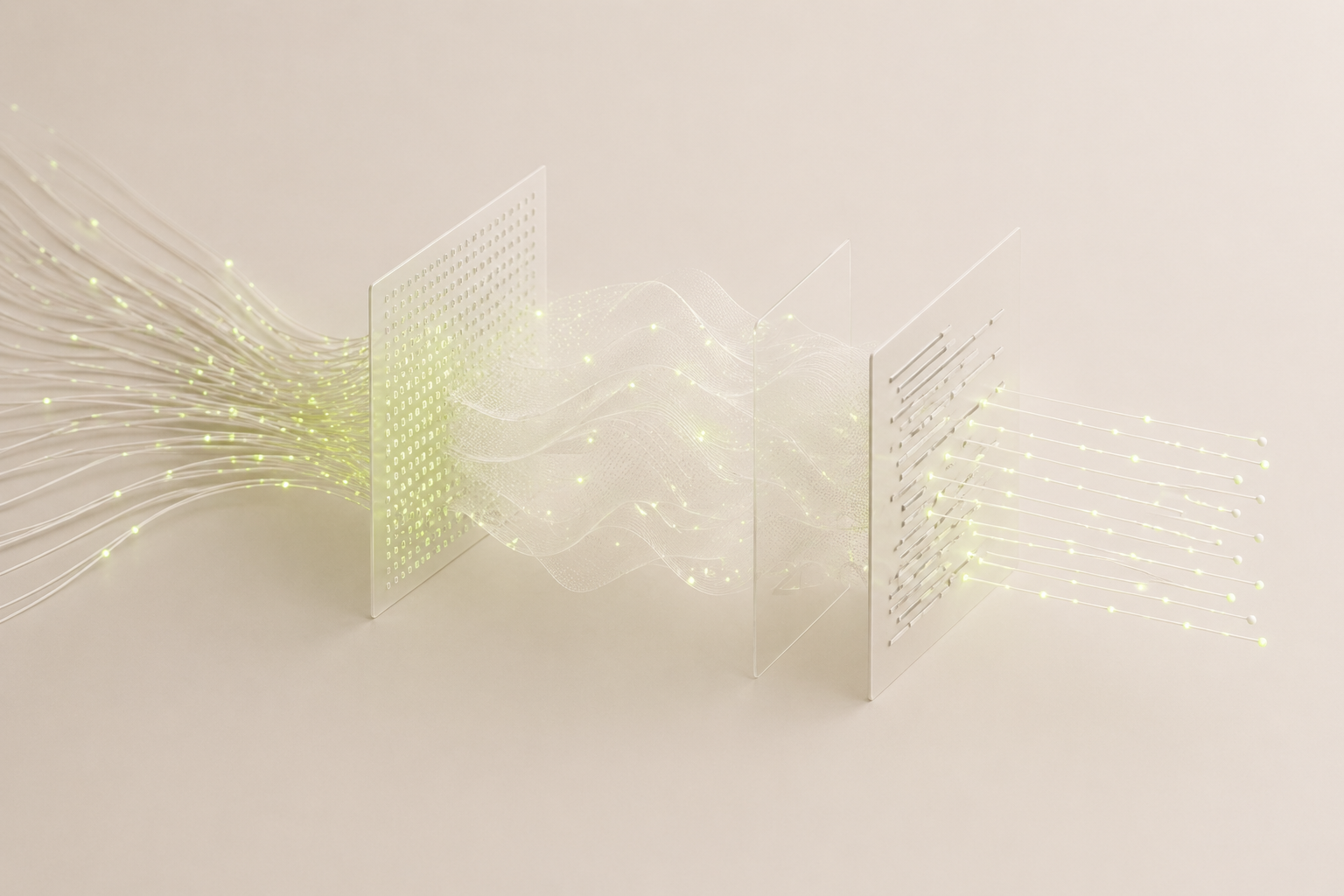
A multi-modal GenAI pipeline behind a 24/7 AI radio station
Anyone could write a dedication and receive a complete original song: custom lyrics, a full audio track, matching album art.
The challenge
Twistag built the multi-modal generative AI pipeline behind a 24/7 AI radio station for a global consumer electronics brand, producing more than 700,000 original songs that were shared 1.5 million times and seen by 2.4 billion people across a six-month campaign from June to December 2025. Anyone could write a personal dedication and receive a complete song in return — custom lyrics, a full audio track in their chosen genre, and matching album art. Twistag orchestrated three separate AI services behind independent provider abstractions on AWS Lambda, with quality scoring and automatic retry at every stage, so a user never received a failed generation.
The brief was a 24/7 AI-powered song dedication station where anyone could write a personal message and receive a fully original song in return. A real song with custom lyrics, a complete audio track in the user's chosen genre, and album art matching the mood. The brand had the campaign concept and needed a technical platform that could deliver on the emotional promise at global scale. That meant three problems at once. The pipeline: chaining lyrics, audio and image generation into something that feels like one product despite three services, three latency profiles and three failure modes. Scale: a global campaign can multiply concurrent users by twenty in minutes. Quality: a bad output sent to someone's grandmother for her birthday is not a UX problem, it is a PR problem. The client is not named publicly.
The solution
Twistag built the pipeline as a sequence of independent stages connected by an orchestration layer on AWS Lambda, with each AI service behind its own abstraction so a provider could be swapped without touching the rest of the pipeline — which Twistag did mid-campaign, replacing one provider without users noticing. OpenAI generates lyrics, chosen for instruction-following reliability across six languages. Suno.AI composes full audio, chosen for its consistency floor rather than its quality ceiling, because for thousands of generations a day predictable output beats occasional brilliance. Adobe Firefly generates album art, chosen because for a global brand campaign content provenance and commercial licensing remove a category of legal risk.
The orchestration is the harder half: a user submits a dedication, an intake service validates it and detects language, OpenAI writes lyrics with verse, chorus and bridge structure, Suno composes audio asynchronously while Firefly generates art in parallel, and an assembly service packages a shareable artefact and publishes it to the 24/7 streaming playlist.
Users never saw a failure, and that was an engineering choice. Quality scoring runs at every stage — lyrics checked for structural completeness and emotional alignment with the user's message, audio checked for completeness and genre accuracy — and anything below threshold triggers an automatic retry. Multi-language support was built as language-specific prompt configurations rather than generate-in-English-and-translate, because each language has its own lyric conventions, rhyme schemes and cultural resonance.
Stack: OpenAI, Suno.AI, Adobe Firefly, AWS Lambda. Services: AI agents and multi-modal AI orchestration, AI-native product engineering, cloud architecture.
The impact
The campaign ran from June to December 2025. By the end, 700,000 unique songs had been created, shared 1.5 million times, seen by 2.4 billion people, and driving 30 million social engagements worldwide. The number Twistag keeps coming back to is not the views but the share-to-creation ratio of roughly two to one: over a million and a half shares against 700,000 creations. Twistag replaced one AI provider mid-campaign without users noticing, because each service sat behind its own abstraction, and the pipeline held through the campaign's traffic spikes without a user ever receiving a failed generation.
People don't share AI-generated content because it's technically impressive. They share it because it means something to them.
Technologies used
- OpenAI
- Suno.AI
- Adobe Firefly
- AWS Lambda
Twistag built the multi-modal generative AI pipeline behind a 24/7 AI radio station that produced more than 700,000 original songs.