
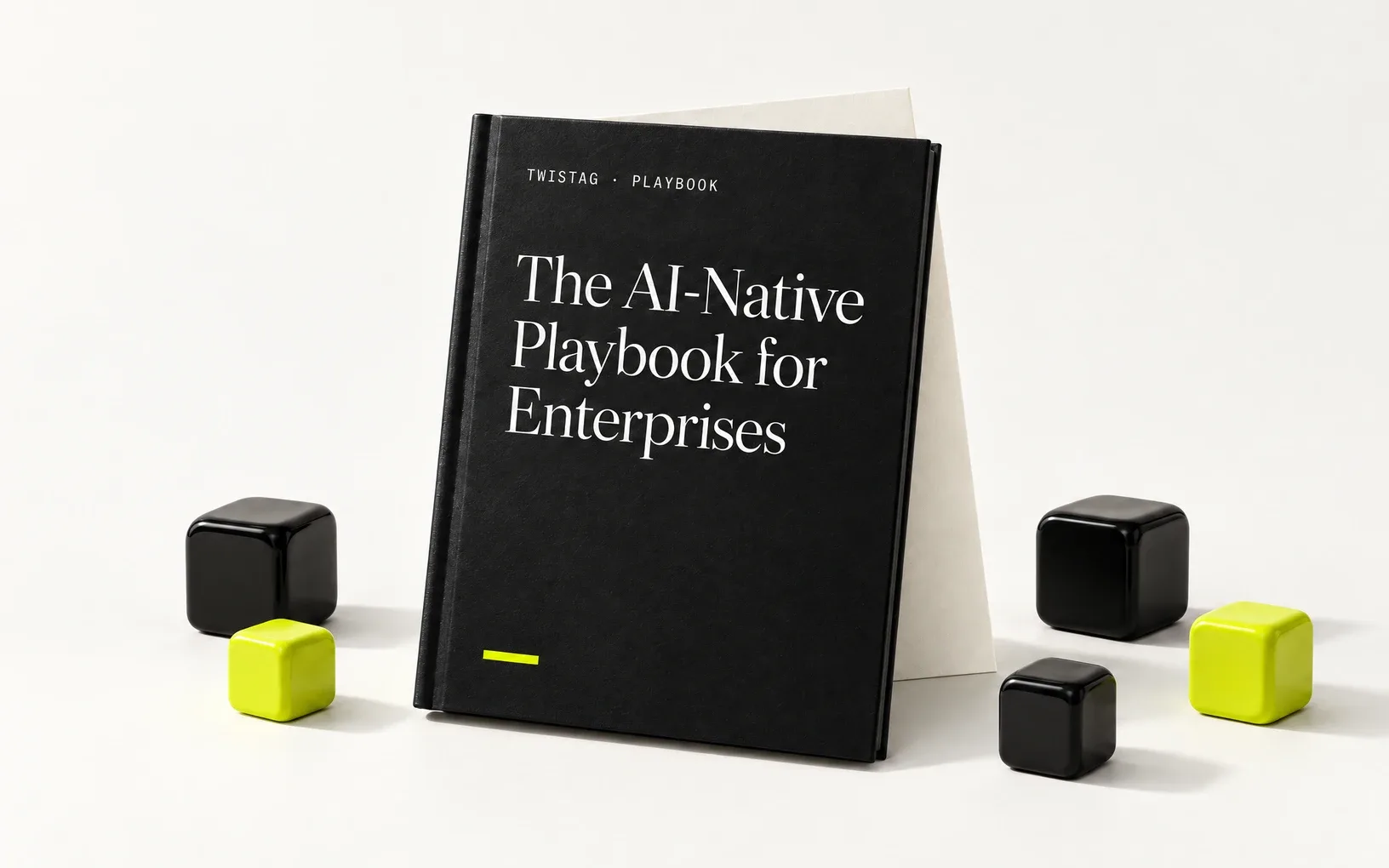
AI Readiness Sprint
A fixed-scope review of a company’s operations, data, systems, people and governance that returns the use cases worth funding first.
- Time2–4 weeks
- FeeFrom €5,000, fixed
- OutputBusiness case and 90-day plan

Most leadership teams have more AI ideas than budget. The sprint decides which ones earn it.
- 01Pilots that never reached daily use. Proofs of concept that impressed once and then stalled.
- 02Tools arriving before the problem is clear. Vendors pitching platforms while the business case is still open.
- 03A board asking for an AI plan with numbers. Leadership needs cost, return and risk on one page.
Six outputs, ready for a leadership decision.
Built for one meeting: the leadership readout where the company decides what to fund. All of it is the company’s to keep.

Funded first: Supplier invoice matching (88), Customer email triage (76), Demand forecast refresh (70). Later: Contract clause review, Sales call summaries, HR policy assistant.
- 01Opportunity mapEvery process in scope reviewed and scored on value, effort and risk.
- 02Use-case shortlistThe three to five worth funding first, each with an owner.
- 03Business caseCost, expected return and payback for the top three.
- 04Data and systemsWhat the data supports today and what needs fixing first.
- 05Risk and governanceWhich AI rules apply where the company operates, and the controls each use case needs.
- 0690-day roadmapA sequenced plan with budget ranges, team and first milestones.
Two to four weeks, set by the teams in scope.
One team takes two weeks. Each additional pair of teams adds about a week of interviews and walk-throughs. The readout always closes the sprint.
Where the shortlist leads.


Five areas, checked against the workflows in scope.
- 01Operations
Where work waits, and which steps are reading, checking, matching or chasing.
3 questions
- Which recurring workflows take the most people-hours?
- Which number would prove a workflow improved?
- Where does the work wait?
- 02Data
Whether the data the use cases need exists, is current, is accessible and is trusted.
3 questions
- Is it in a system of record, or only in spreadsheets?
- Is it current, and who keeps it current?
- Can it be reached through an API or a warehouse?
- 03Systems
Which core systems hold it and whether an agent can read from and write to them.
3 questions
- Do the ERP, CRM and ticketing systems expose APIs?
- Who can grant access within a week?
- Where could a solution run?
- 04People
Who would own each use case and who would review the agent’s work.
3 questions
- Who owns the workflow and reviews the agent?
- Does the team have capacity next quarter?
- Which teams already use AI for whole tasks?
- 05Governance
What data may be used where, who approves a new use, which rules apply.
3 questions
- Which data may go to which AI provider?
- Who approves a new AI use, and how fast?
- Which AI rules apply, and at what risk level?
How the sprint compares with other assessments.
| Compared on | AI Readiness Sprint | Readiness assessment | Maturity model | Online self-assessment |
|---|---|---|---|---|
| Input | Interviews with workflow owners, data and system checks, leadership priorities | Interviews, data checks, system access | Survey against a framework | A questionnaire |
| Output | Shortlist, business case, 90-day plan, in a leadership read-out | Shortlist, business case, plan | A score and a benchmark | A score and a sales call |
| Specific to the company | Yes, to the workflow and the number it moves | Yes, to the workflow | Partly, to the function | No |
| Duration | 2–4 weeks | 2–4 weeks | 4–8 weeks | 20 minutes |
| Cost | Fixed fee from €5,000 | Varies | Often part of a strategy engagement | Free |
| Decision it enables | What to prove first, and what to fix before it | What to fund first | Where the company stands | Whether to talk to the vendor |
About the AI Readiness Sprint.
What is an AI readiness assessment?
What does the AI Readiness Sprint cost?
How does the sprint compare with an online AI readiness assessment?
Is there a free way to check readiness first?
How long does it take?
Who needs to be involved?
What does the company receive at the end?
Does the sprint commit the company to a build with Twistag?
Does it cover AI regulation?
Find the first use case
worth funding.
Book a sprint.
Two to four weeks, from €5,000, fixed. A business case and a 90-day plan at the end.
A senior lead replies within one working day.


Take the 2min check.
Fifteen yes/no questions across the same five areas, with a score and the first fix for the two weakest.