






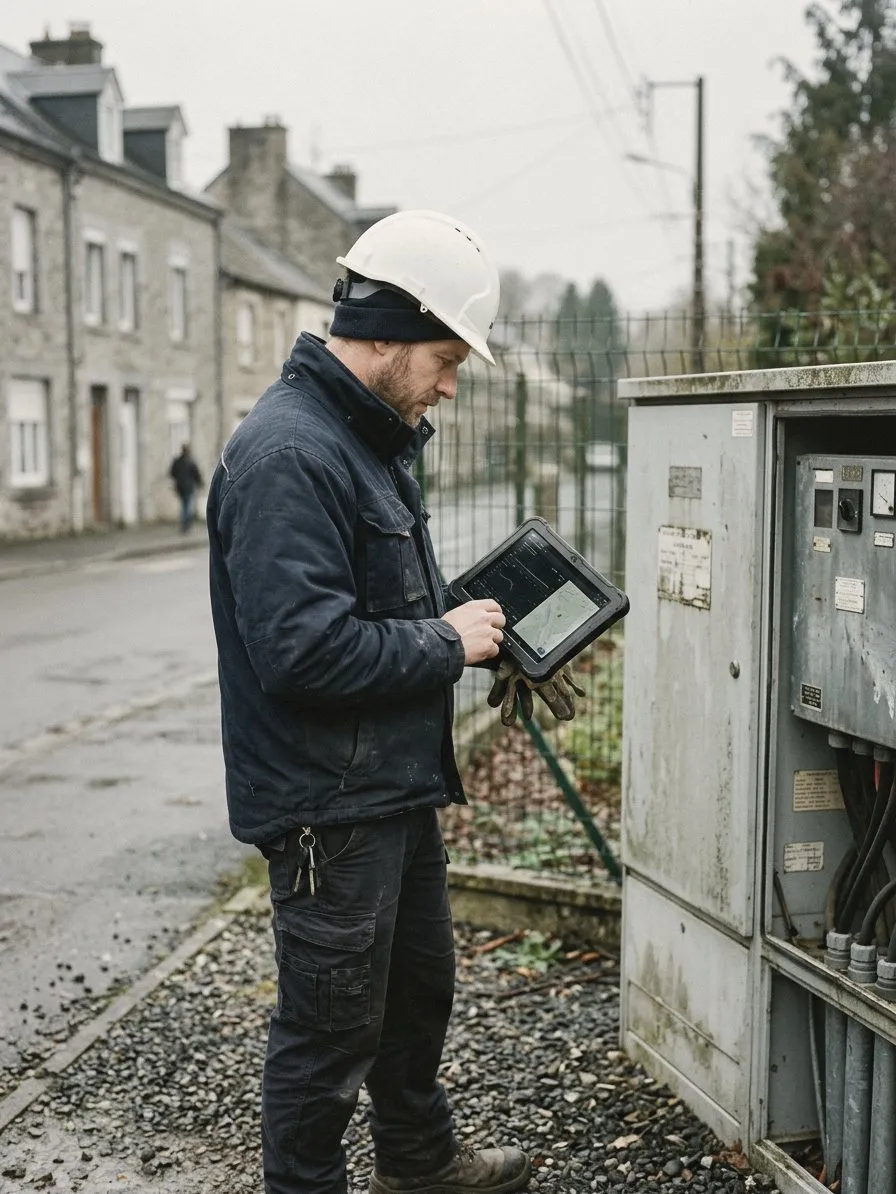

A field engineer checking a tablet beside a street-side utility cabinet

AI agents for utilities and the public sector.

Faults, field work and public messages handled with care.

Agents and data platforms for utilities, operators and public bodies, built into the asset, field and customer systems already in place, with people approving what matters.

What is changing
  1. 01Ageing assets, fewer engineers

    Networks need more maintenance each year, while experienced field staff retire.

  2. 02Every message is scrutinised

    Outage notices, bills and replies must follow guidelines and regulation, word for word.

  3. 03Reporting never stops

    Regulators, boards and the public expect numbers that are current and explained.

Where AI pays back first

Agents across the service.

The agents Twistag builds most often for utilities and public bodies, from fault to report. Each one keeps a person on the decisions that matter.

01 · Triage

Faults, outages and visits.

Fault triage agent

Classifies reported faults, checks known outages and books a visit or sends a status update.

People approveDispatchers confirm emergency visits and priority customers.

02 · Maintain

Sensors, work orders and crews.

Maintenance scheduling agent

Turns sensor alerts and work orders into a crew schedule, with parts checked before anyone is dispatched.

People approveSupervisors confirm safety-critical jobs and any planned downtime.

03 · Inform

Notices and replies to customers.
Start here

Reply drafting agent

Classifies each message, pulls up the account and drafts a reply in the house voice, checked against written guidelines.

People approveAn advisor approves or edits every reply before it goes out.

04 · Bill

Collections and promises to pay.

Cash collection agent

Tracks overdue invoices, sends reminders tuned to each customer’s history and logs every promise to pay.

People approveCredit controllers approve escalations, payment plans and account holds.

05 · Comply

Policy and regulation questions.

Policy question agent

Answers staff questions on internal policy and regulation from approved sources only.

People approveCompliance owns the source library and reviews flagged answers.

06 · Report

Numbers for boards and regulators.

Reporting agent

Answers business questions in plain language from the data warehouse, showing the numbers and the query behind them.


People approveData owners approve new metrics and definitions.
How to start

Three steps from question to daily use.

  1. 01Find where it pays back2–4 weeks · from €5,000

    Map the service from fault to report, score each process on value, effort and risk, and leave with a shortlist and a 90-day plan.

    AI Readiness Sprint
  2. 02Build the first agent6–12 weeks

    One agent on real data, connected to the asset, field, CRM or billing systems already in place, with people approving each action.

    Multi-agent Systems & Agent Engineering
  3. 03Scale and governOngoing

    More agents on one platform, each with its own access rights, EU AI Act risk class and audit log.

    Agent Governance & Security
Questions

About AI in utilities and the public sector.

Which processes should get an agent first?

The ones that repeat every day, follow written rules and are easy to check. Customer communications, fault triage and maintenance scheduling are common first choices. The AI Readiness Sprint ranks them for the specific organisation.

Which systems do the agents connect to?

The ones already in place: asset management, field service and work order systems, CRM and billing, GIS and telemetry feeds. Agents read plant data through existing interfaces and never write to network controls.

How long until the first agent runs every day?

Six to twelve weeks from scoping, on real data, with people approving each action until the results hold.

Where does customer and network data stay?

In the organisation’s own cloud or data centre, under GDPR for personal data. Each agent has its own access rights, and every action is logged for audit.

How does the EU AI Act apply here?

Each agent gets a risk classification before it goes live, with the controls that class needs. Communication, scheduling and reporting agents are usually limited risk. Anything that decides access to an essential public service is high risk under the Act, and is scoped with the compliance team from day one.

Who owns what is built?

The client owns everything: code, prompts, data pipelines and documentation, handed over in full.
Talk to us

Let’s talk.

Tell us about the company and what it needs. A senior lead takes it from there.

A senior lead replies within one working day.

Talk to us

Tell us where work gets stuck.

A senior engineer replies within one working day.

Interested in

Thirty-minute call

Pick a time.